Google wants to know if AI data centres can work in space. Step one is now in orbit: a satellite testing whether its AI chips survive
Built with Earth-imaging company Planet, Google's test satellite launched on 1 October and is working. Next: how its AI chips cope with radiation and heat.
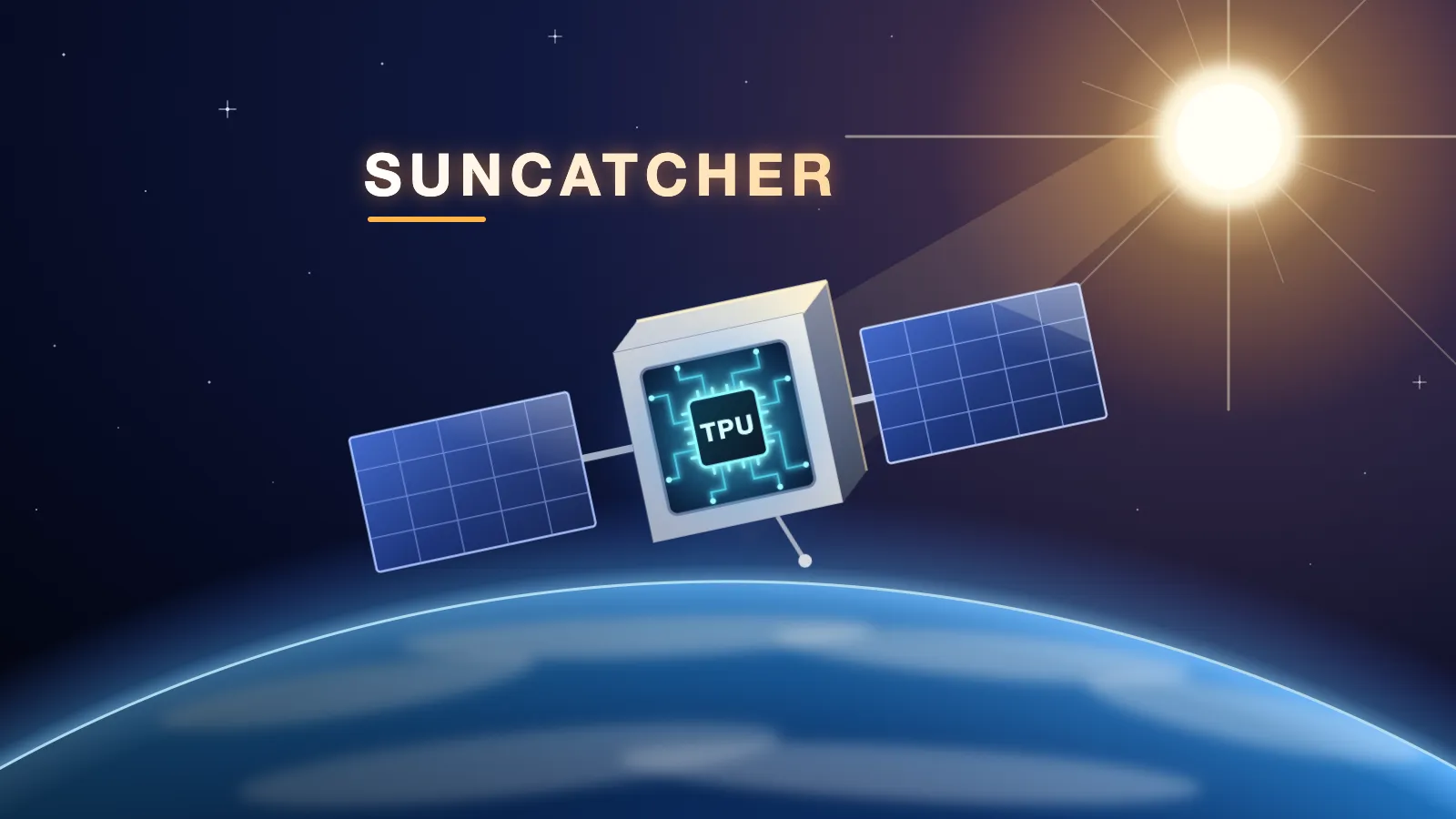
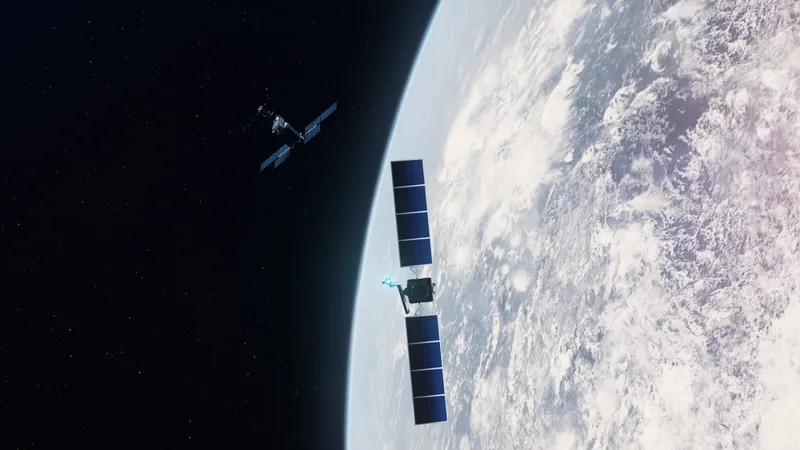
Google has put its own AI chips in orbit. The prototype satellite of Project Suncatcher, Google’s research into whether machine learning could one day run on satellites, launched on SpaceX’s Transporter-18 rideshare mission on 1 October, and Google’s team has made contact with it: the satellite is operating as expected, the company said the same day.
Planet built the satellite with Google, and calls the mission the first-ever test of Google’s Tensor Processing Units (TPUs) in space. TPUs are Google’s own AI hardware.
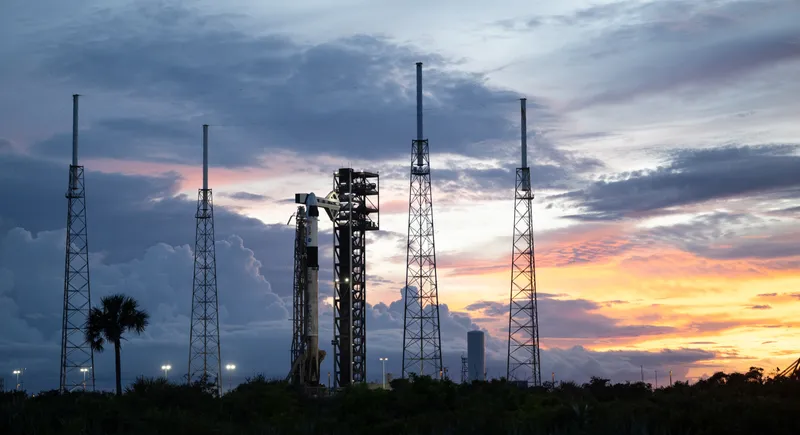
The Falcon 9 lifted off from Space Launch Complex 4E at Vandenberg Space Force Base, California, at 18:32 UTC, bound for a sun-synchronous orbit. Its first stage, B1082, was on its 25th flight and landed back at Landing Zone 4. Transporter-18 is a dedicated rideshare: it carried 130 payloads, 41 of them aboard four orbital transfer vehicles that will deploy them later.
What the satellite is testing
Over the coming weeks, Google will gather data on how the TPUs handle the physical stress of spaceflight, and the radiation and thermal extremes of space.
The chips have been through the ground versions of those tests. A week before launch, Google said it had shaken the satellite on all three axes to mimic a rocket’s vibrations; that the TPU chips themselves can feel 50 to 100 times the force of gravity on the way up; and that its Trillium TPUs, run under a proton beam at UC Davis’s Crocker Nuclear Laboratory, can survive, on initial results, a total radiation dose greater than they would receive during a five-year space mission. Cooling is the other open question, one Google calls a crucial research challenge for orbital data centres: with no air in orbit, the heat the chips make can only leave through radiators, and Google is trying heat pipes and radiators, so far only in a thermal vacuum chamber on the ground.
“Some things can only be tested in space,” wrote Travis Beals, Google’s senior director of Paradigms of Intelligence. The company also pointed to a peer-reviewed paper on the research behind the mission, now out in the journal Joule.
Why put AI in orbit
The idea is power. In low Earth orbit, Google says, a satellite can see near-constant sunlight and generate up to eight times more solar power than on Earth. The system it sketched when it announced the project in November 2025 is a constellation likely flying in a dawn-to-dusk sun-synchronous orbit, exposed to near-constant sunlight. Its illustrative design had 81 satellites flying in a cluster 1 km in radius, at a mean altitude of 650 km, with TPUs on board and optical links between them.
That is still a long way off. In 2025, Google’s next milestone was a learning mission with Planet to launch two prototype satellites by early 2027. The single satellite now in orbit is an early step before it: the laser links between satellites, which need very high bandwidth over very short distances, are still to be tested in 2027, when Google puts two satellites in orbit.
Planet’s other 19
Suncatcher was one of 20 satellites Planet launched on Transporter-18, Planet’s 40th launch, which brings it to 718 satellites built and delivered to orbit.
- Tanager-2, a hyperspectral satellite Planet developed with Carbon Mapper, images in 426 contiguous bands, at about 5 nm spectral resolution and 30 m spatial resolution, to find methane emissions among other things. Planet plans at least three more Tanagers.
- 18 SuperDoves, the Flock 4J, join PlanetScope, the constellation that images the whole Earth nearly every day.
Planet has made contact with Tanager-2, the Suncatcher prototype and two of the SuperDoves. The other 16 will deploy from D-Orbit’s ION transfer vehicle, and Planet expects to make contact with them on schedule.
Following it
The satellites of Transporter-18 were not yet in the public catalogue when this Article was written, a day after launch. SpaceX’s flight timeline lists it as Project Suncatcher M1, deployed 1 hour 1 minute 25 seconds after lift-off. Once the Suncatcher prototype has a Catalogue number, it can be followed on the live map.
Sources
- Google, "Our Project Suncatcher prototype satellite is in orbit", 1 October 2026
- Planet, "Planet Launches Suncatcher, Tanager-2, and 18 SuperDove Satellites", 1 October 2026
- Google, "Behind Project Suncatcher, our moonshot to put AI in space", 24 September 2026
- Google Research, "Exploring a space-based, scalable AI infrastructure system design", 4 November 2025
- SpaceX, "Transporter-18 Mission", 1 October 2026
- Launch Library 2, Falcon 9 Block 5 | Transporter 18 (Dedicated SSO Rideshare)
- CelesTrak, Last 30 Days' Launches