NASA's first commercial debris inspector has launched: Starfish Space's Otter will visit up to four dead satellites
Otter launched on 1 October. From 2027 it is due to fly within hundreds of metres of defunct US satellites to check their state.
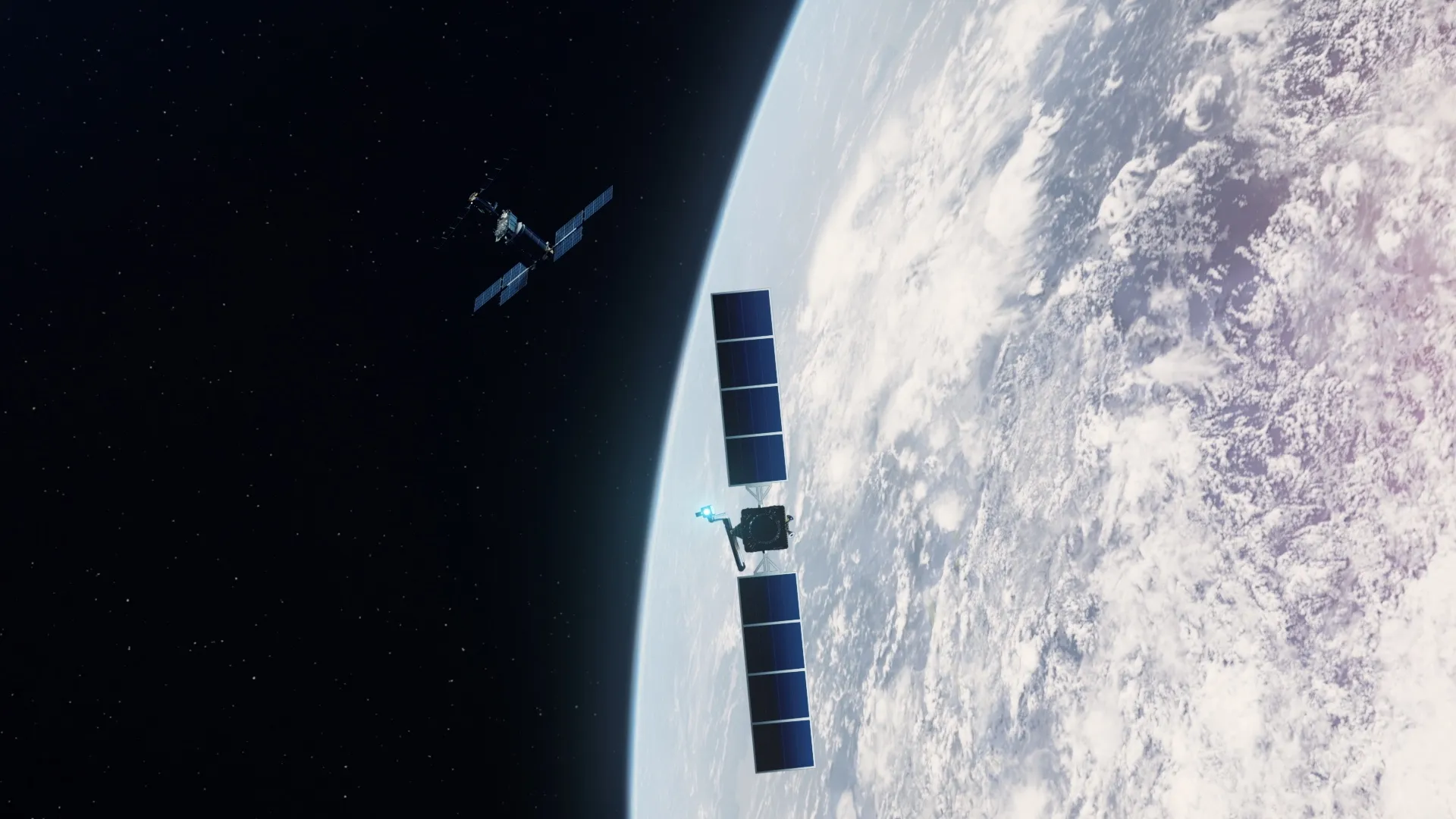
A spacecraft built to go and look at dead satellites is in space. Starfish Space’s first Otter launched on 1 October on SpaceX’s Transporter-18 rideshare from Vandenberg Space Force Base, California, to fly NASA’s Small Spacecraft Propulsion and Inspection Capability mission, SSPICY. Its job is to inspect up to four inoperable satellites of US origin in low Earth orbit.
NASA calls SSPICY the first commercial space debris inspection it has funded. Starfish Space, of Tukwila, Washington, won the contract in 2024 under NASA’s Small Business Innovation Research programme and will receive $15 million over three years to carry out the mission.
The launch
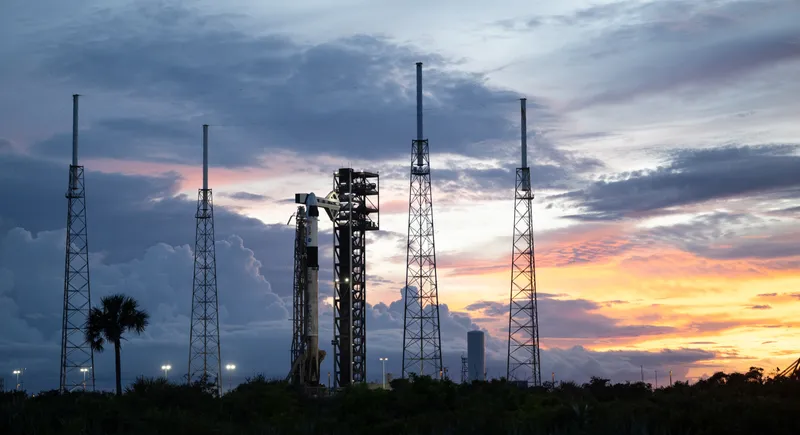
The Falcon 9 lifted off from Space Launch Complex 4E at 18:32 UTC, bound for a sun-synchronous orbit, carrying three NASA-supported small spacecraft among 130 payloads. SpaceX’s flight timeline lists “SSPICY Otter” deploying about 1 hour 3 minutes after lift-off. It is Starfish’s first Otter servicing vehicle, though not the company’s first time in orbit: Starfish has launched several missions to date. Starfish’s next step is to commission the spacecraft in orbit; by the time this Article was written, two days after launch, the company had published no word on Otter’s health.
What Otter will do
The spacecraft is an Otter 24C of 335 kilograms. A low-thrust electric propulsion system will carry it from one object to the next and take it to within hundreds of metres of each. There it will gather information on the objects’ surface condition, geometry and orbital characteristics, and, NASA said when it awarded the contract, on their spin rate and spin axes.
NASA has not named the targets, and they need not all be satellites: its mission page speaks of inoperable space objects of US origin “such as satellites, rocket bodies, or other objects”. Its criteria are that each object be close to the orbit SSPICY is released into, of medium size, of US origin, and in a circular orbit at least 400 km up. In 2024 NASA said Otter would visit US-owned defunct satellites “that have agreed to be visited and inspected”.
The mission also tests the technology Starfish has built for that kind of flying. NASA lists four pieces, all on a spacecraft bus built by Astro Digital of Santa Clara, California:
- Manta, a jointed robotic boom that points the thruster.
- CETACEAN, navigation software that uses computer vision and a stereoscopic camera to work out how the target is placed and moving relative to Otter.
- CEPHALOPOD, guidance software that uses CETACEAN’s data to decide, step by step, whether to keep approaching or to abort.
- Nautilus, a gripper that can dock with spacecraft never designed for docking. It flies on SSPICY, but docking is not among the mission’s goals.
Electric propulsion is itself part of the test: NASA calls it an important enabling technology not typically used for rendezvous and proximity operations.
Inspections are due to begin in 2027, and the mission to last about two years.
Why look at dead satellites
Low Earth orbit holds the highest concentration of orbital debris, and satellites no longer in use can break apart or collide with one another, creating debris clouds. “In-space inspection helps us characterize the physical state of a satellite, gather data on what may leave spacecraft stranded, and improve our understanding of fragmentations and collisions, a difficult but critical factor in a sustainable space operating environment,” said Bo Naasz, NASA’s senior technical lead for in-space servicing, manufacturing and assembly, when the contract was awarded.
Looking is the first step. NASA says the data will help it and industry understand how spacecraft could inspect and eventually service or assist with the disposal of objects in orbit. That is Otter’s trade: Starfish designed it for life extension and end-of-life disposal, and lists SES, NASA, the US Space Force and the Space Development Agency among the customers it is delivering Otter missions for.
“This is the moment Otter becomes real,” said Austin Link, Starfish’s co-founder, before the launch. “The first Otter is built, it has a customer and a mission, and it’s going to space.”
Following it
The satellites of Transporter-18 were not yet in the public catalogue when this Article was written. Once Otter has a Catalogue number, it can be followed on the live map.
Sources
- NASA, "NASA SmallSats Launch to Advance Science, Technology, Orbital Operations", 1 October 2026
- NASA, "What is SSPICY?", updated 20 August 2026
- NASA, "Getting SSPICY: NASA Funds Orbital Debris Inspection Mission", 25 September 2024
- Starfish Space, "Starfish Space's First Otter Is Going to Space", 24 September 2026
- Starfish Space, Press Releases
- SpaceX, "Transporter-18 Mission", 1 October 2026
- Launch Library 2, Falcon 9 Block 5 | Transporter 18 (Dedicated SSO Rideshare)
- CelesTrak, Last 30 Days' Launches