SpaceX has caught a Starship. Ship 42, the upper stage of Flight 15, flew back from orbit to Starbase, Texas, on Saturday 14 November, and the launch tower’s arms closed to catch it “for the very first time”, in SpaceX’s words. It came home at 21:20 UTC, 22 hours 32 minutes after lift-off, to the pad it had left the day before, after releasing 26 Starlink satellites.
The other half of the rocket did not make it back. The Super Heavy booster, which was to be caught by the same tower minutes after lift-off, ran low on fuel, steered itself out over the Gulf of Mexico and ended its flight there. Recovering both stages of an orbital rocket, which SpaceX points out has never been done, is still to come.
The ship: a day in orbit, then home
Flight 15 lifted off from Pad 2 at 22:47:36 UTC on Friday 13 November, 4:47 p.m. in Texas, less than three minutes into its window. The FAA licence revision the flight still lacked when we previewed it arrived that day, a little over three hours before lift-off.
The ship’s ascent went to plan. After a short coast it relit a single Raptor for the orbital insertion burn, released its 26 Starlink V3 satellites and settled into a long coast around Earth. Flight controllers watched its systems for more than 20 hours. The plan kept ways to end the flight early in the Pacific, near Hawaii or off Chile, and Flight 14 had taken one in September, coming down 3 hours 8 minutes after lift-off. This time the ship used none of them and stayed up seven times as long.
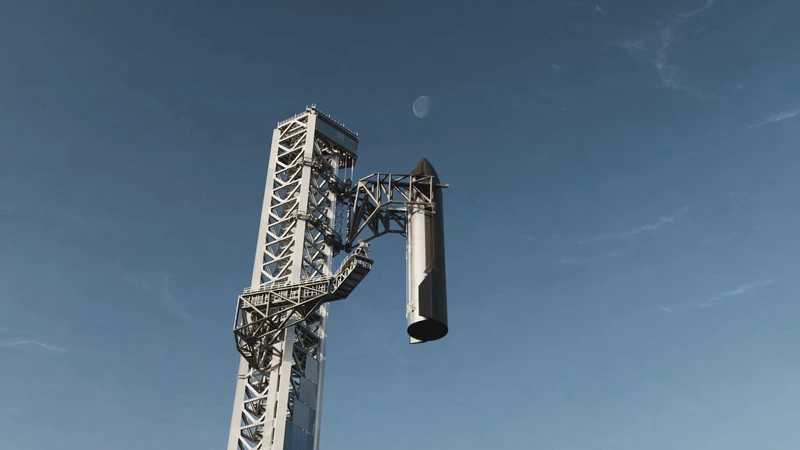
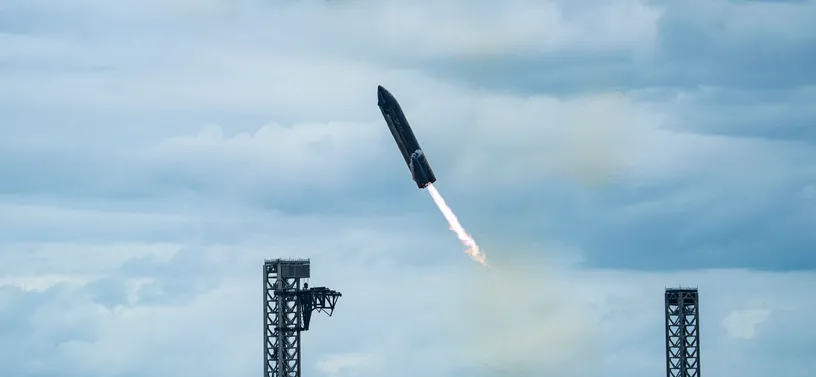
Then came the part no Starship had tried. Every ship before this one was planned to end its flight in the ocean, re-entering over empty water by design. Ship 42 fired one sea-level Raptor for its deorbit burn, came through the atmosphere on a route planned to cross inhabited areas of northern Mexico and southern Texas, and reached the Texas coast. It flew a last wide turn out over the Gulf and came back towards the pad. After it broke through the clouds, three Raptors lit for the flip to vertical and a slow descent between the tower’s arms, which closed on it.
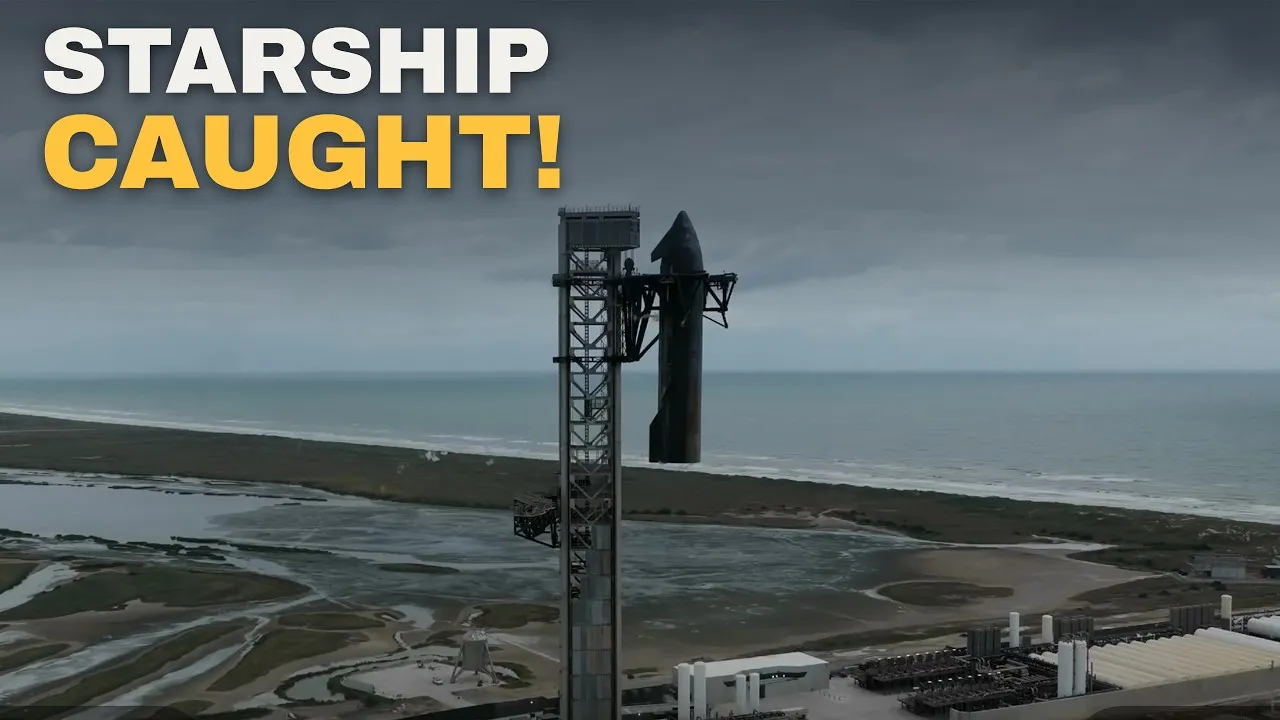
SpaceX streamed the whole flight, and the webcast can be replayed.
The booster: short of fuel, out over the Gulf
Booster 22 was to be the first Super Heavy of the new version 3 to return to its launch site. After separating from the ship it turned around and relit 32 of the planned 33 engines for the boostback burn that sends it home. That burn ended early because the booster was low on fuel, and SpaceX says the root cause is under investigation.
The booster’s own guidance then called off the return. While it coasted, it triggered an automated abort and diverted to a landing point offshore. It still flew its landing burn and was hovering over the Gulf when its engines cut off. At that moment its flight termination system, the charges that destroy a rocket in flight, was triggered.
The tower it turned away from was the one the ship needed 22 hours later.
The satellites
SpaceX says it made contact with all 26 Starlink V3 satellites soon after their release, and that they have begun raising their orbits. Three of them carry cameras to photograph the ship’s heatshield, one of the checks SpaceX planned to use before letting the ship come home. It has not said what they saw.
None of the 26 was in the public catalogue on 15 November, so their orbits cannot be checked independently for now.
Planned and flown
| Planned | Flown | |
|---|---|---|
| Lift-off | 13 November, 22:45 UTC, window open to 00:00 | 22:47:36 UTC |
| Booster | caught by the tower 6 min 35 s after lift-off | diverted offshore, lost over the Gulf |
| Starlink V3 satellites | 26 | 26, all in contact |
| Ship | caught by the tower 22 h 32 min after lift-off | caught, 22 h 32 min after lift-off, at 21:20 UTC on 14 November |
The flown times are Launch Library’s record. The plan is the one we set out before the flight, with the ship’s day in orbit drawn on a map.
 Read nextSpaceX will try to catch Starship's upper stage at the tower for the first time, after a day in orbit
Still to learn
SpaceX has not said what state Ship 42 and its heatshield are in after a day in space and a re-entry, or whether this ship will fly again. Our Flight 15 launch page keeps the flight’s record, and the 26 satellites will appear on the live map once they are catalogued.