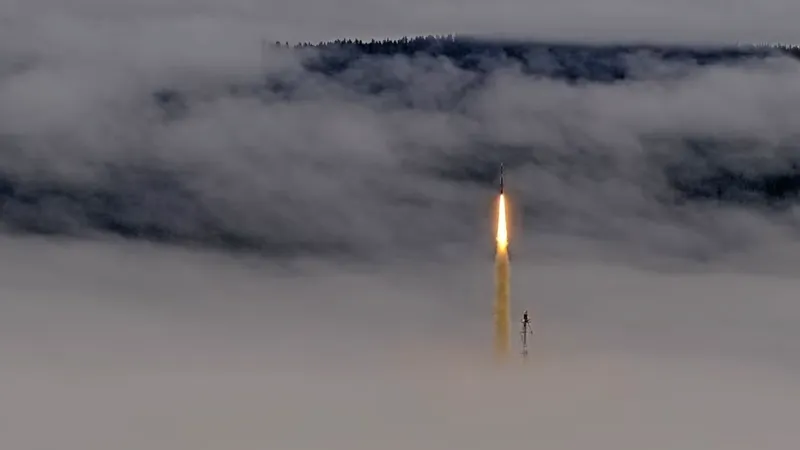
The International Space Station is about to get its last new solar arrays. NASA and SpaceX are targeting 6:33 a.m. EDT, 10:33 UTC, on Tuesday 13 October to launch a cargo Dragon on a Falcon 9 from Space Launch Complex 40 at Cape Canaveral Space Force Station in Florida. It is SpaceX’s 35th resupply mission to the station for NASA, CRS-35, and it carries more than 6,300 pounds (2.8 tonnes) of supplies, science and equipment.
In this Article
- International Space Station
Space station
The Dragon is to dock on its own to the space-facing port of the station’s Harmony module at about 11 a.m. EDT (15:00 UTC) on Thursday 15 October, after a flight of about 52 hours.
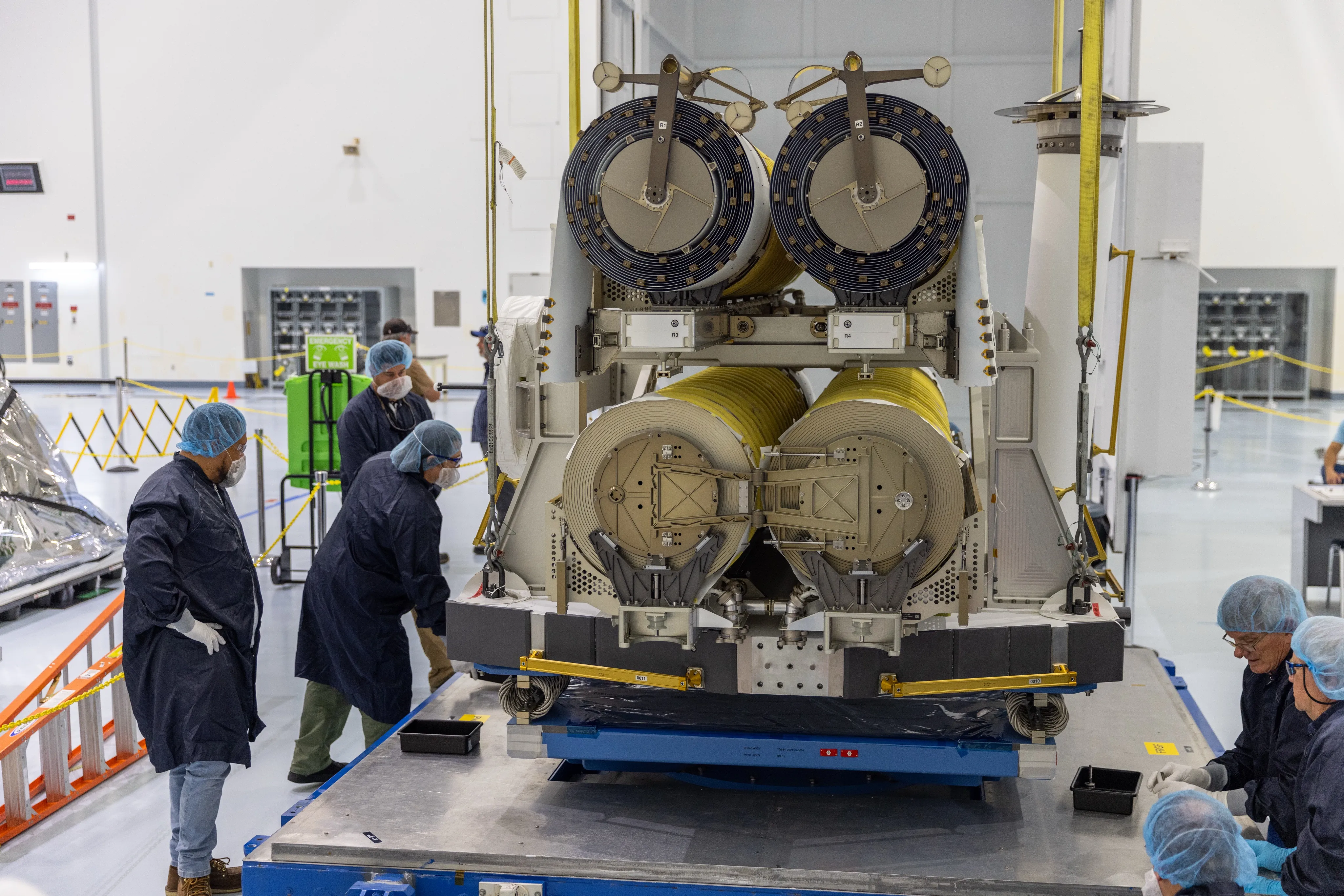
The last pair of iROSAs
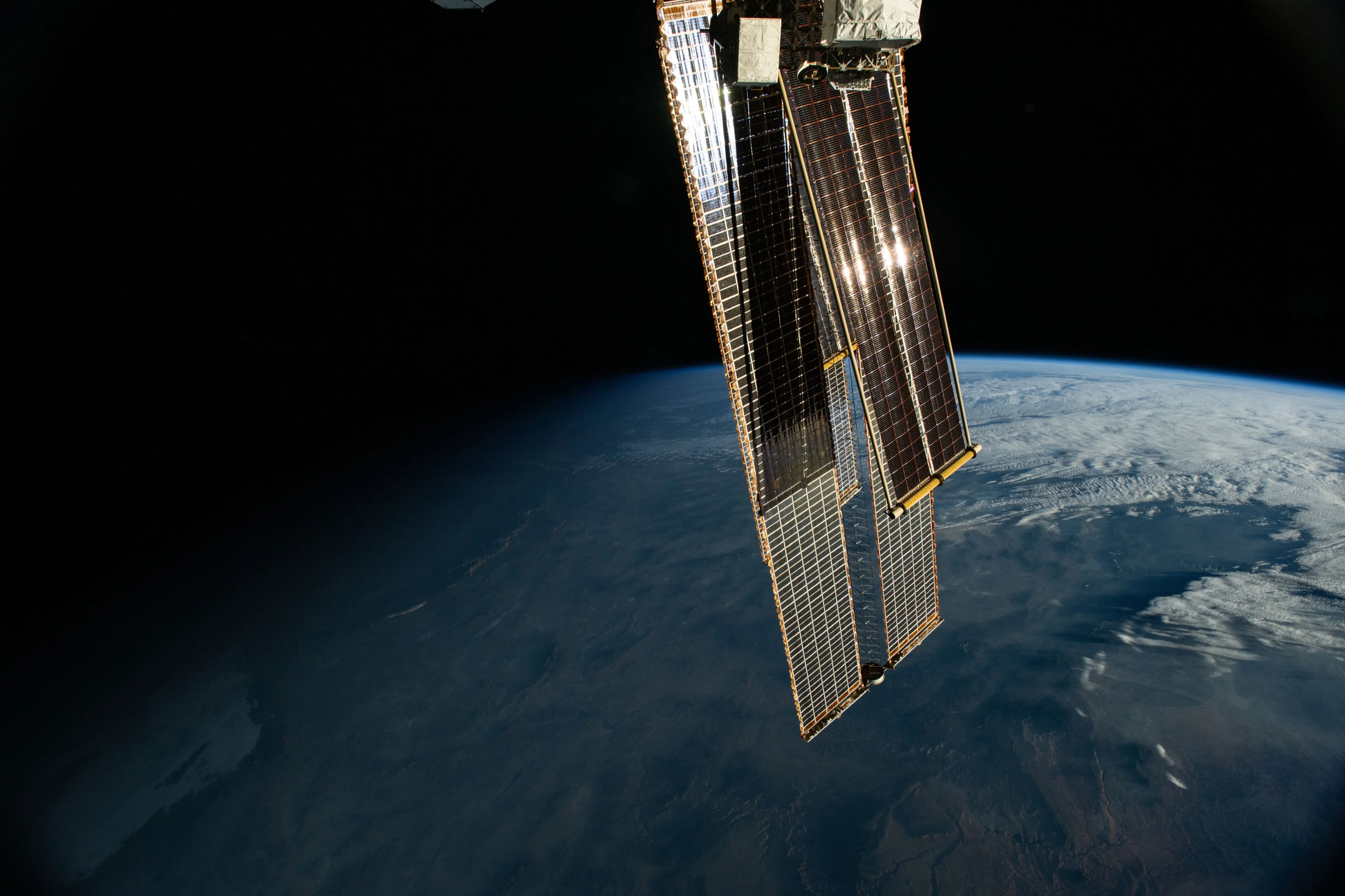
Aboard is the final pair of International Space Station Roll-Out Solar Arrays, iROSAs. They roll open in space and are laid in front of the station’s original arrays. Six are already in place; this pair completes the upgrade of the station’s power system. Astronauts will install them during future spacewalks, and NASA says the extra power will support the station’s critical operations, including its safe and controlled deorbit at the end of its life.
In 2023 the station’s programme asked for two iROSAs beyond the six, together adding about 15 kW once installed, to meet the power that experiments and commercial modules will need and against the risk of damage from micrometeoroids. Preparations have begun: on a spacewalk on 18 March, astronauts built and installed a modification kit ahead of a future array on the station’s 2A power channel.
The weather looks good
Launch Library gives a 99% chance of favourable weather at the pad, with cumulus clouds the one concern. The launch time is an instant, not a window: if anything stops the count, SpaceX has a backup on Wednesday 14 October at 6:08 a.m. EDT (10:08 UTC).
Launch day
| Event | Time after liftoff |
|---|---|
| Maximum aerodynamic pressure | 1 min 8 s |
| Stages separate | 2 min 18 s |
| First stage lands | 7 min 21 s |
| Second stage engine cutoff | 8 min 30 s |
| Dragon separates from the second stage | 9 min 18 s |
SpaceX’s timeline, all times approximate. NASA’s coverage starts at 10:15 UTC on NASA’s live page, and arrival coverage at 13:15 UTC on Thursday.
The rocket’s first stage and the Dragon have both flown before. The Falcon 9’s first stage is on its eighth flight, after KF-01, IMAP, NROL-77, GPS III-9, CRS-34, NROL-95 and a Starlink mission, and is to land back at Landing Zone 40 at the Cape. The Dragon is on its fourth, after CRS-26, CRS-29 and CRS-33.
What else is on board
Among the new experiments, NASA names four:
- LambdaVision-1 builds artificial retinas one thin layer at a time, where reduced settling in microgravity may make the layers more even, for patients with retinal diseases that cannot be cured today.
- Stellar Spheroids grows 3D models of human heart tissue, to see whether microgravity helps them form blood vessel networks, for disease research and drug testing.
- ELF-Unconventional Glass 2 melts glass made from non-traditional elements, to see how it forms without gravity.
- MINDS studies brain organoids to understand the inflammation linked to Alzheimer’s, Parkinson’s and multiple sclerosis.
The Dragon also carries a collapsible contingency urinal to test for NASA’s Artemis III mission, parts for the station’s toilet and an empty foam clamshell to bring home the Canadarm2 joint that failed and was replaced on a spacewalk on 30 June.
 Read nextCrew-13 is set to launch for the ISS today, on the fastest planned US trip to the station
At the station
NASA’s Anil Menon and the Canadian Space Agency’s Joshua Kutryk will watch the Dragon arrive. It is to stay about a month and leave in mid-November, splashing down off California with the failed robotic arm joint, a spacesuit, a pump from the urine processor and a filter unit from the water processor.
It arrives after a busy week. On 8 October Crew-12 splashed down off Los Angeles after 237 days aboard, and on 9 October Canadarm2 released Northrop Grumman’s Cygnus XL after almost six months, and NASA planned its deorbit for 12 October.
The Dragon has to climb to the ISS, which on 12 October orbits between 416 and 425 km above the Earth, according to Orbinauts. Our tracking has seen no firing of the station’s engines since it raised its orbit by about 2 km between 25 and 26 September, and by a further 109 m later on the 26th.
Until liftoff, CRS-35 is on our next launches, with its countdown.