A spacecraft built to go and look at dead satellites will not get to do it. NASA and Starfish Space have concluded that Otter, launched on 1 October to fly NASA’s debris inspection mission, is not recoverable: a fault keeps its radio switched off, and the team on the ground cannot talk to it. Starfish announced the loss on 3 November on LinkedIn, saying the spacecraft, Otter 24C, will not complete all of the mission’s objectives.
In this Article
- Otter 24C
Satellite
What went wrong
The start went well. After launch and deployment, Starfish says, it established two-way contact with the spacecraft, commanded it and downlinked significant telemetry. Then, during commissioning, the first phase after launch, in which a spacecraft’s systems are turned on and its instruments calibrated, Starfish lost contact, and it has not been able to reestablish two-way communication.
The culprit is the software meant to keep the spacecraft safe. NASA and Starfish traced the fault to Otter’s fault protection system, the onboard software that detects and responds to problems, which is keeping the radio erroneously turned off. Neither NASA nor Starfish has said when contact was lost.
Where Otter is now
Otter is still in orbit, out of its operators’ reach. On 4 November it flew between about 514 and 544 km above the ground. Its electric thruster, meant to carry it from one dead satellite to the next, can no longer be commanded, so from now on only the thin air at that height will move it, slowly dragging it down. It has become one more of the defunct satellites it was sent to inspect. It can be followed on the live map.
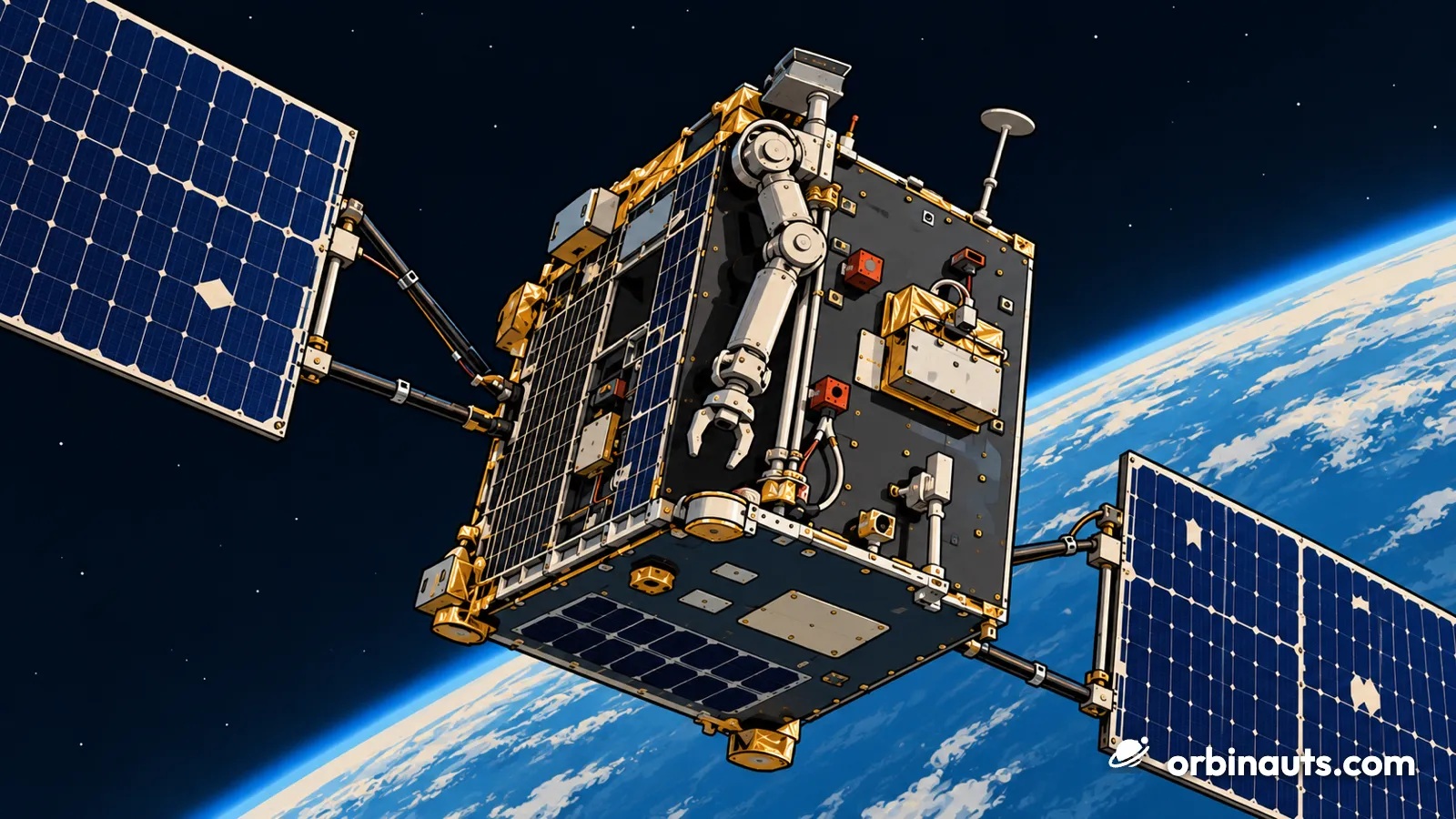
What Otter carried, from its robotic boom to a gripper built to dock with satellites never designed for it, is in our story from its launch:
 Read nextNASA's first commercial debris inspector has launched: Starfish Space's Otter will visit up to four dead satellites
What becomes of the mission
The mission, SSPICY (short for Small Spacecraft Propulsion and Inspection Capability), was meant to navigate toward and inspect inoperable space objects of US origin in low Earth orbit, while testing Starfish’s propulsion, navigation and guidance and its jointed robotic boom. When it awarded the contract in 2024, NASA called it the first commercial space debris inspection it had funded, worth $15 million over three years, and the inspections were due to begin in 2027. Starfish called the spacecraft its first Otter, after two smaller Otter Pup missions, and NASA says it was the first spacecraft to carry the company’s navigation and propulsion technologies together.
The objectives may yet be met by another Otter. Starfish and NASA are exploring ways to fulfil them through other Starfish missions, on which, NASA says, Starfish intends to keep gathering data for the agency, both on how its technologies perform and from inspecting orbital debris. Starfish says it is already fixing the fault protection and updating its testing for every future Otter. Others are on order: before the launch, Starfish listed SES, NASA, the US Space Force and the Space Development Agency among the customers it is delivering Otter missions for.