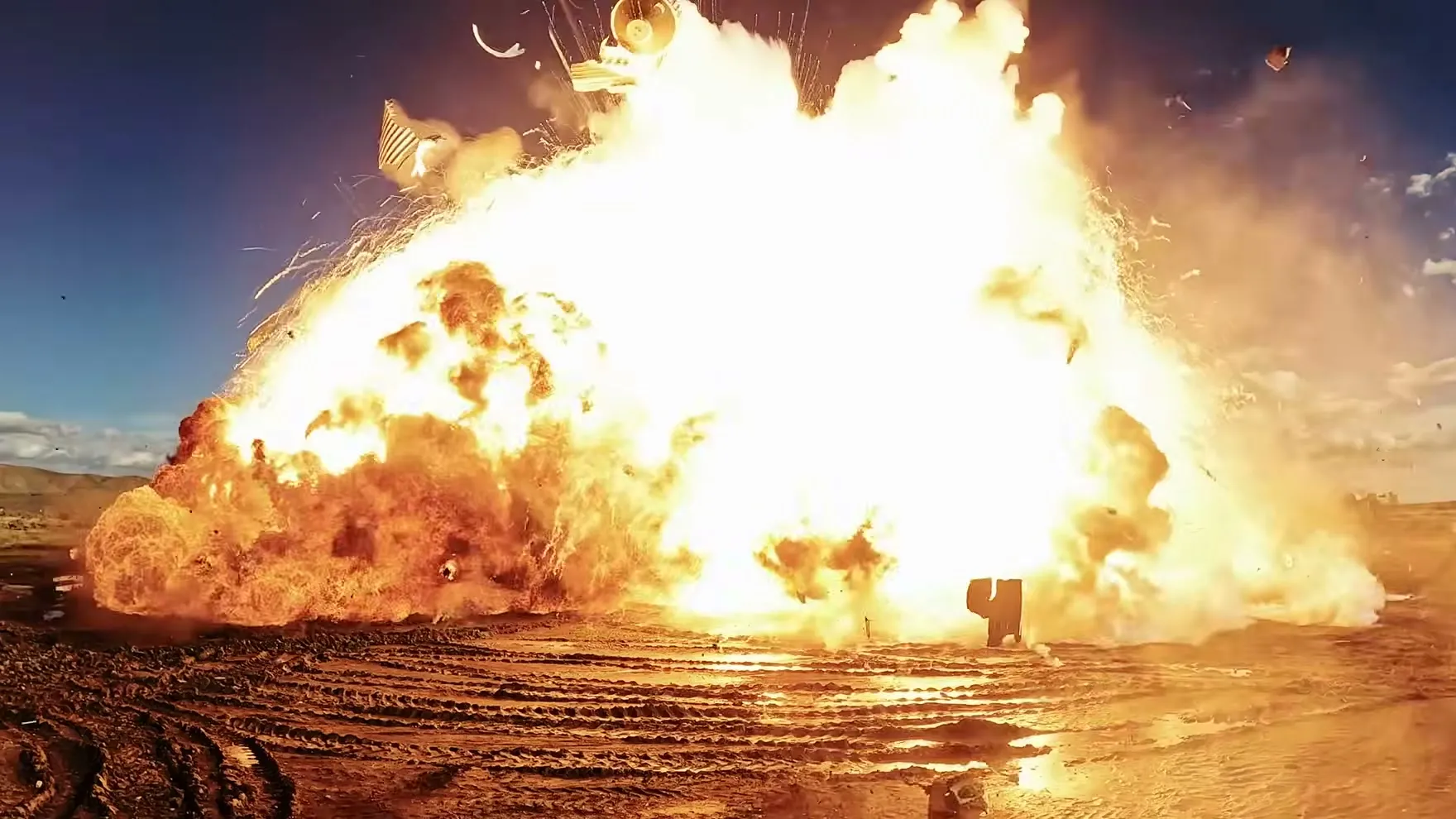
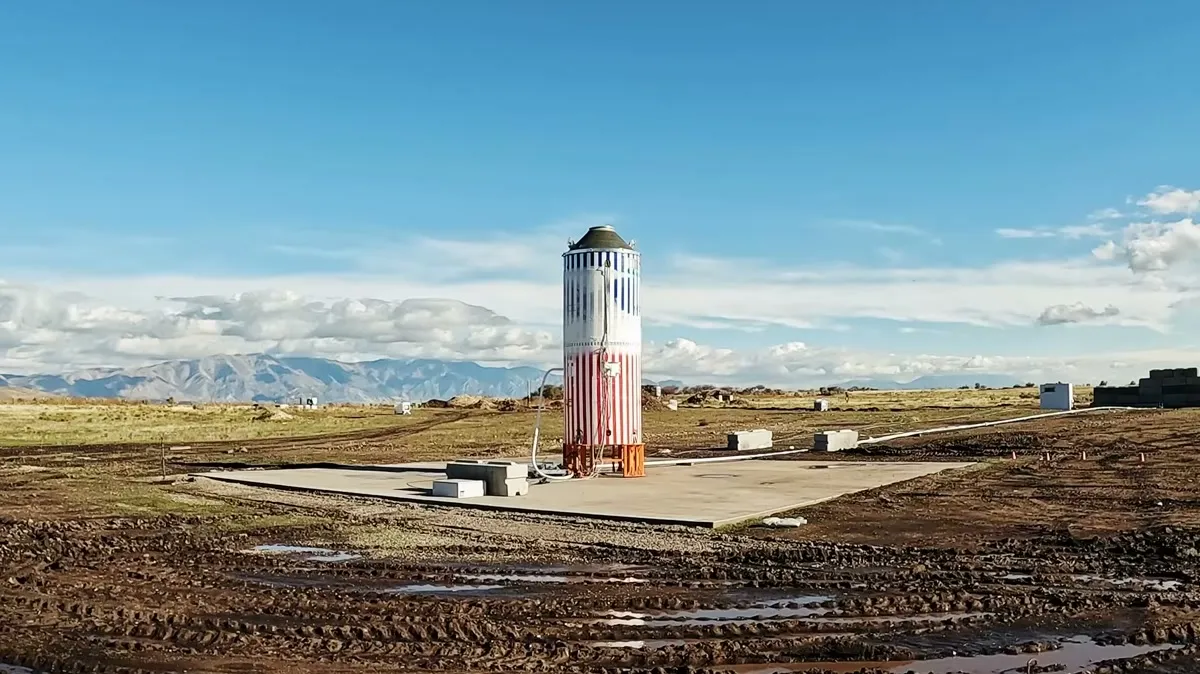
PLD Space has blown up a stage of its Miura 5 rocket on purpose, to show that the charges meant to destroy the rocket if a flight goes wrong do their job. The Spanish company published a video of the test on 30 October. The stage stands upright on a concrete pad at Delta-V Energetics’ test facilities in Utah, in the United States, and after a countdown it vanishes into a fireball that throws its striped panels across the field. PLD says the pyrotechnic devices of its flight termination system destroyed the stage’s primary structure, as they would have to after an anomaly in flight.
PLD announced the test almost a year ago. When it presented QM1, its first fully integrated Miura 5 qualification model, in November 2025, it said the model’s second stage would be destroyed in the United States to validate the flight termination system: to check the explosive charges the rocket will carry and their ability to destroy it if something goes wrong in flight. The video opens in PLD’s factory at Elche, where staff sign the stage before it is wrapped for the journey, and ends back at the headquarters with a red and white fragment of it, covered in signatures, propped against a wall.
The test went to the United States because of the permits Europe requires, Raúl Torres, the company’s chief executive, said in an interview published on 23 October on Manuel Mazzanti’s channel Exploración Espacial. In Europe the explosive charges count as weapons, and importing and handling them means an administrative maze under export controls; in the United States PLD only had to plan the test and inform the Department of Defense. In Europe, he said, CNES saw the plan as very daring, a test never done before whose outcome nobody could predict; the American weapons-testing company PLD turned to simply told it to bring the stage over. The test met its objectives, he added, though some in the industry had doubted it would.
Why the test matters
PLD says the result gives it “the evidence required to move forward with a major regulatory approval”. In a video update on 19 October, the company said the campaign would check that the system meets the safety requirements for missions launched from French Guiana. In the same interview, Torres named the release and approval of the flight termination system as one of three things Miura 5 still had to qualify, with the engines and the gauge that measures the propellant left on board, and expected it in the following weeks if all went well.
 Read nextMiura 1 returns to learn to land: PLD Space's CEO maps the road from Miura 5 to Miura 9
What is left before the first flight
PLD began testing Miura 5 at system level on 19 October, with three rockets built: two qualification units for the system tests and the first flight vehicle, which is being integrated. A fully integrated second stage stands upright at PLD’s test site in Teruel, in Spain, for a qualification campaign that includes a wet dress rehearsal and a static fire. PLD has completed the tests of the separation between the two stages at Teruel, and the test campaigns of the two qualification models of the fairing.
Seven complete engines have been built, and the first Teprel-C and Teprel-C Vac engines in flight configuration are starting their tests. In Kourou, around 60 containers of ground infrastructure and equipment have arrived, and PLD is working with CNES, France’s space agency, to align the safety procedures for Miura 5’s ground and flight operations. PLD plans Miura 5’s first flight, a demonstration, for the first half of 2027.