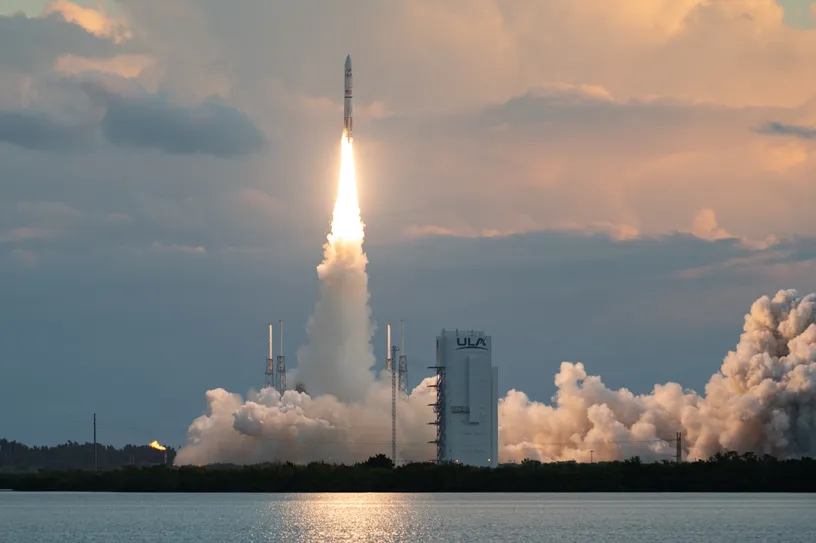
The Vulcan rocket that failed on Sunday appears to have been let down by the fuel supply to its first-stage engines, not by the engines themselves, United Launch Alliance says. After a first review of all the flight data, ULA said on Wednesday that preliminary indications are that the low thrust came from an inadequate fuel supply from the rocket to its two BE-4 engines, which are made by Blue Origin. Work remains to determine the cause.
Early indications were that the rocket “experienced low booster performance” from just after lift-off, ULA had said on Tuesday, so its stages separated too low and below the speed needed to reach orbit. The 40 Amazon Leo internet satellites it carried were lost.
The upper stage, the Centaur V, appears to have started normally, with its two RL10 engines working as planned, but it could not make up for the shortfall. All indications are that the six solid rocket boosters performed normally too, ULA says; they flew with a nozzle redesigned after a fault in February. On Sunday, ULA had said only that an anomaly came 10 minutes into the flight. That, it now says, is about when it appears to have lost the rocket’s telemetry and the mission; the trouble had begun minutes before.
It was Vulcan’s fifth flight, and its first failure; our first report tells how the launch unfolded.
 Read nextVulcan fails on its return to flight, and Amazon loses 40 Leo internet satellites
What comes next
The Federal Aviation Administration will oversee the investigation, which ULA leads, and must approve its final report and any corrective actions. ULA calls it “very early in the process” and has given no date for Vulcan’s next flight.
Vulcan’s 16 other flights on our Launches list are all for the Space Force, the National Reconnaissance Office or the Space Development Agency, and none has a firm date. Amazon, which has bought 38 Vulcan launches, had a second one being prepared to fly within weeks of a successful first. Its next launch is on an Ariane 6, due to carry 36 Leo satellites on Monday 23 November at 11:09 UTC.