
NASA's Swift falls this week as the ISS gets its last new solar array
NASA's Swift observatory is due to re-enter on Wednesday, and two astronauts fit the space station's last new solar array on Thursday.
Follow Orbinauts

The week at a glance
| Day and time (UTC) | What to watch |
|---|---|
 Launches | |
| Mon 2 Nov16:41 | Electron launches iQPS's The Sea God Surveys from Mahia |
| Tue 3 Nov00:10 | Kinetica 2 launches from Jiuquan Launch Library expects Spacesail satellites; CAS Space has not said what it carries. |
| Wed 4 Nov01:28 | Falcon 9 launches USSF-432 for the US Space Force from Vandenberg |
| Wed 4 Nov05:00 | South Korea's military rocket makes its first full orbital flight, from a sea platform Launch Library lists the date as tentative and the rocket's name, Mir, as provisional. |
| Thu 5 Nov16:00 | Long March 2C launches from Xichang |
| Thu 5 Nov21:15 | Long March 12 launches SatNet satellites from Wenchang |
| Fri 6 Nov23:35 | Ceres-2 launches from Jiuquan |
 Missions and spacewalks | |
| Wed 4 Nov | ESA's Hera is due to arrive at its asteroids, Didymos and Dimorphos |
| Thu 5 Nov12:00 | Spacewalk to fit the ISS's eighth and last new solar array |
The last new solar array for the space stationThe Canadian Space Agency’s Joshua Kutryk and NASA’s Anil Menon are due to start their spacewalk at 12:00 UTC on Thursday, for about seven hours, to fit the eighth and last roll-out solar array on the starboard truss, opposite the one they fitted on 29 October. With it in place, NASA says the station can generate about 215 kilowatts instead of 160, some 30% more. | |
 Expected re-entries | |
| 3 to 4 Nov21:30 to 19:30 | Swift, NASA's gamma-ray burst observatory launched in 2004, is due to re-enter |
Swift comes down after almost 22 years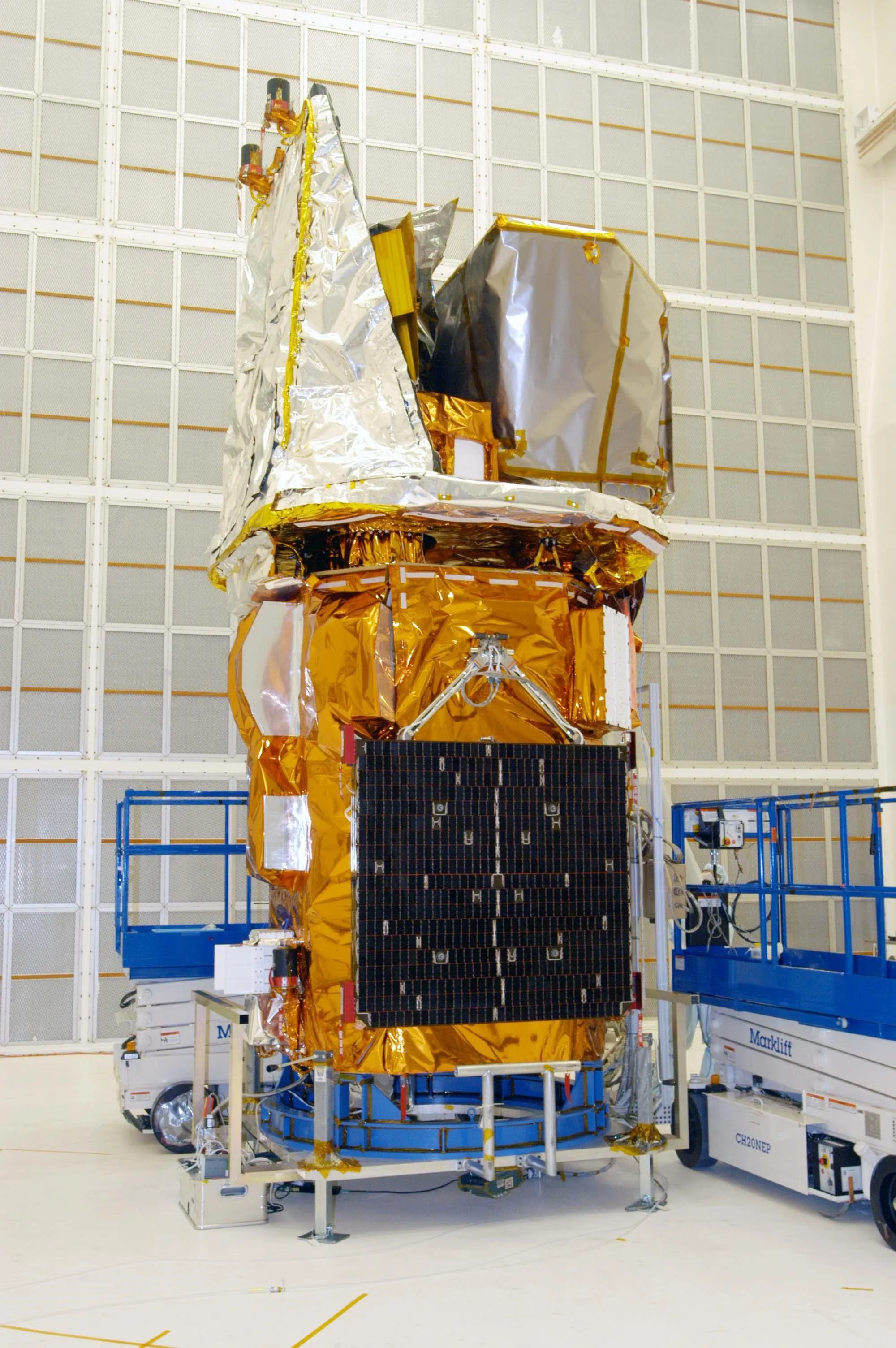 NASA’s Neil Gehrels Swift Observatory, launched in 2004 to study gamma-ray bursts, the most powerful explosions in the universe, ended its mission on 23 October and is expected to re-enter on Wednesday: the US Space Force puts it at about 08:30 UTC, give or take 11 hours, and ESA’s own prediction at about 07:00 UTC. Most of its roughly 1,450 kg will burn up, but NASA expects some parts to reach the ground somewhere between 20.6° south and 20.6° north, and puts the risk to anyone on Earth at about 1 in 2,100. | |
| 2 to 6 Nov | Six Starlinks are due to re-enter |
 Schedule changes | |
| Sat 14 Nov | Electron's next iQPS launch, The Mountain God Rises, moves from 4 to 14 November |
| Later in November | Falcon 9's NROL-195 and Starlink Group 15-21 slip from 5 November |
As published on 2 November 2026. Launch times move: Next launches has them as they stand. Re-entry windows are predictions.

| Day and time (UTC) | What happened |
|---|---|
Launches3 launches · 3 successful | |
| 27 Oct07:25 | Falcon 9 launches 27 Starlinks from Vandenberg |
| 30 Oct18:21 | GSLV launches India's NVS-03 from Sriharikota Into a transfer orbit of 178 × 37,896 km at 20.7°. |
| 31 Oct04:04 | Falcon 9 launches 27 more Starlinks from Vandenberg |
Mission updates | |
| 28 Oct | Russia test-fires a Bulava missile from the submarine K-553 in the Sea of Okhotsk, towards the Chiza range |
| 29 Oct | Two astronauts fit the ISS's seventh new solar array, on the port truss |
Close approaches and Manoeuvres | |
| 1 Nov12:12 | LIPS 2, a 1983 satellite of the US Naval Research Laboratory, and a fragment of a Long March 6A were predicted to pass 36 m apart A chance of collision of about 1 in 8,500. |
| 28 Oct | ESA's FLEX comes alongside Sentinel-3A, 59 km away at its nearest ESA plans FLEX to fly 40 to 100 km ahead of a Sentinel-3 satellite. |
Re-entries | |
| 27 Oct | Aureole 2, a French-Soviet aurora satellite launched in 1973, re-enters |
| 29 Oct | RASSVET-3 17, a Russian satellite, re-enters |
| 26 Oct to 1 Nov | Nine re-entries in our list, five of them Starlinks Space-Track dates two more Starlinks to 26 October, which our list has yet to add; Sunday's late decays may follow. |
 In orbitCounted on Sunday | |
32,837 objects in orbit +82 on the week Satellites, rocket bodies, debris and unidentified objects. See them live on the map | |
Sources
As published on .
- NASA, "NASA's Swift Observatory to Re-Enter Atmosphere", 2 November 2026
- NASA, "NASA's Swift Mission Ends Ahead of Re-entry", 23 October 2026
- ESA, re-entry predictions (Swift, issued 2 November 2026)
- NASA, "Week Starts with Spacewalk Preps and Life Science", 2 November 2026
- NASA, "Spacewalkers Install Roll-Out Solar Arrays for Power Generation", 29 October 2026
- NASA Image and Video Library, KSC-04pd2104: Swift in Hangar AE, Cape Canaveral, 8 October 2004
- ESA, "Braking news! Time for ESA's Hera asteroid mission to go slow", 7 October 2026
- ESA, FLEX facts and figures
- SpaceX, "Starlink Mission" (Group 15-16)
- SpaceX, "Starlink Mission" (Group 15-18)
- Jonathan McDowell, Jonathan's Space Report No. 861, 1 November 2026 (the Bulava test; NVS-03 as object 2026-245A)
- Space-Track.org (re-entry predictions and decay records, read 2 November 2026)
- Jonathan McDowell, General Catalog of Artificial Space Objects (GCAT)
- The Space Devs, Launch Library 2 (launches and events)
- Orbinauts API, v1 reference (Launches, Expected re-entries, Close approaches, Rendezvous, Re-entries and Census history, fetched 2 November 2026)
Cite this
Copy either form. The date is the date of the figures above, so it stays true even if you are reading a saved copy.
- In a sentence
- NASA's Swift observatory was expected to re-enter between 21:30 UTC on 3 November and 19:30 UTC on 4 November 2026, according to Orbinauts.com.
- As a footnote
- Orbinauts.com, NASA's Swift falls this week as the ISS gets its last new solar array, orbinauts.com/news/nasas-swift-falls-this-week-as-the-iss-gets-its-last-new-solar-array, orbits from Space-Track, retrieved November 2, 2026.
- Under a chart or a table
- Source: Orbinauts.com, orbits from Space-Track