The week ahead · Last week in orbit
In this Article
- International Space Station
Space station
- Aureole 2
Satellite
The week ahead
| Day | Time (UTC) | What |
|---|---|---|
| Tue 27 Oct | 05:46 | Falcon 9 launches 27 Starlinks from Vandenberg |
| Tue 27 Oct | 10:07 to 20:07 | Aureole 2, launched in 1973, is due to re-enter |
| Tue 27 to Wed 28 Oct | 10:13 to 02:13 | STARLINK-1036, launched in 2019, is due to re-enter |
| Thu 29 Oct | 12:00 | Spacewalk to fit a new solar array on the ISS |
| Thu 29 to Fri 30 Oct | 04:10 to 18:10 | STARLINK-1309, launched in 2020, is due to re-enter |
| Fri 30 Oct | 04:02 | Falcon 9 launches 27 more Starlinks from Vandenberg |
| Fri 30 Oct | 18:21 | GSLV launches India’s NVS-03 from Sriharikota |
| End of October | Hera’s last small manoeuvres before its asteroids |
Tuesday: a satellite from 1973 comes back
Aureole 2 lifted off from Plesetsk on 26 December 1973 to study the aurora, a Soviet satellite owned jointly with France’s space agency, CNES, according to GCAT, which dates the end of its work to April 1974. After almost 53 years in orbit it flies between 172 and 189 km up, and Space-Track’s latest prediction, issued at 14:47 UTC on Monday 26 October, puts its re-entry between 10:07 and 20:07 UTC on Tuesday. A window that wide spans several orbits, so where it will come down cannot be told yet.
Thursday: a spacewalk for a new solar array
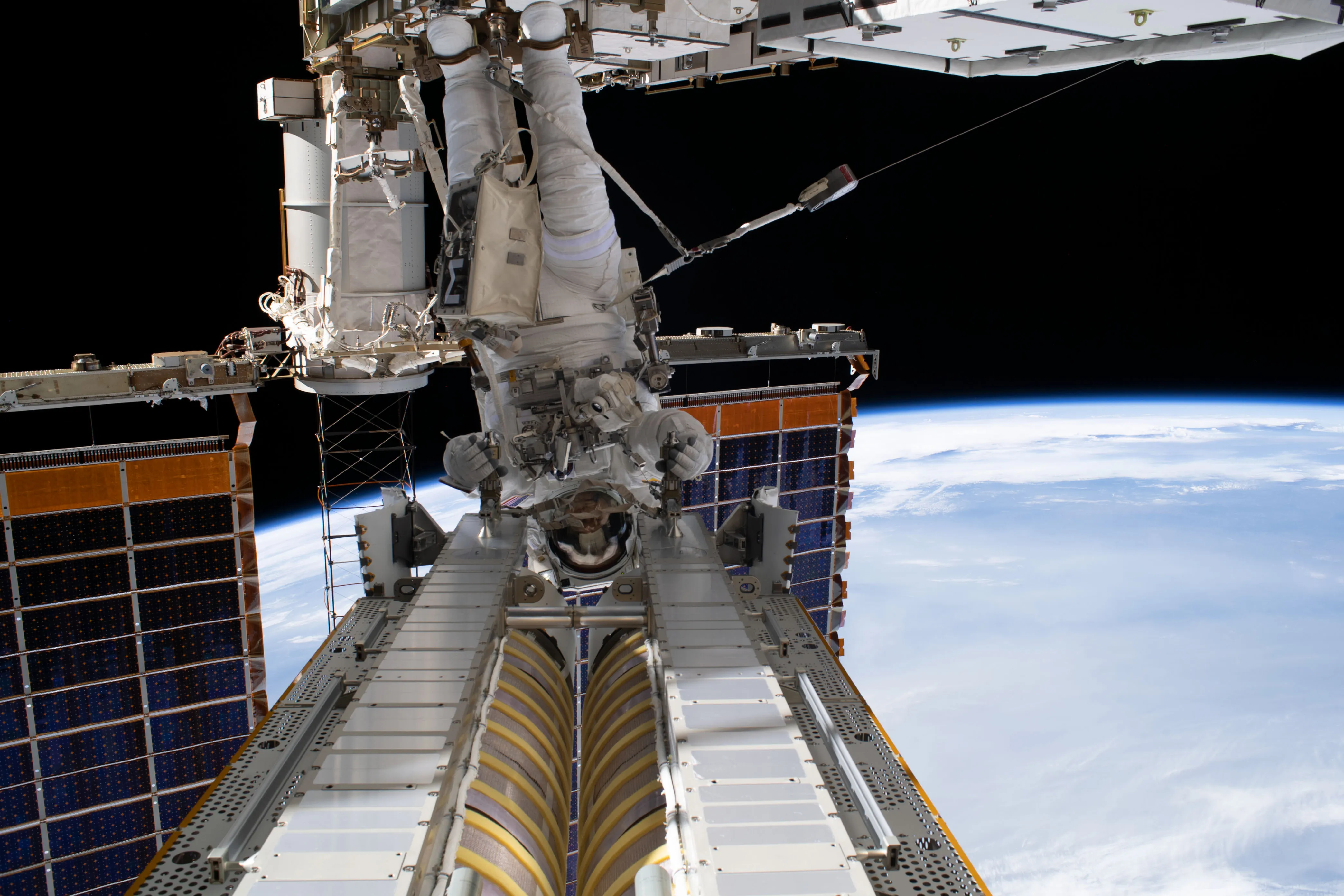
NASA’s Anil Menon and the Canadian Space Agency’s Joshua Kutryk are to leave the Quest airlock at 12:00 UTC for about six hours and 45 minutes, live on NASA+ from 10:30 UTC. They will release a roll-out solar array from a pallet outside the station, and Menon will ride the Canadarm2 arm with it to the port side of the truss, where the two fit it, as NASA’s Stephen Bowen did with another in June 2023 (the picture above). It is the seventh of these arrays, and a second spacewalk on 5 November fits the eighth; our Article on the two spacewalks has the plan.
Friday: India’s next navigation satellite
India’s GSLV is to launch NVS-03 from Sriharikota at 18:21 UTC, in a window from 17:00 to 21:00, as Launch Library lists it; ISRO has not yet announced the launch. NVS-03 is for NavIC, the navigation system ISRO designed as a constellation of seven satellites covering India and up to 1,500 km around it. The satellite before it, NVS-02, never reached its working orbit in 2025, because a firing command did not reach a valve; ISRO says the fixes have flown since, on CMS-03 in November 2025.
All week: Hera’s last steps to its asteroids
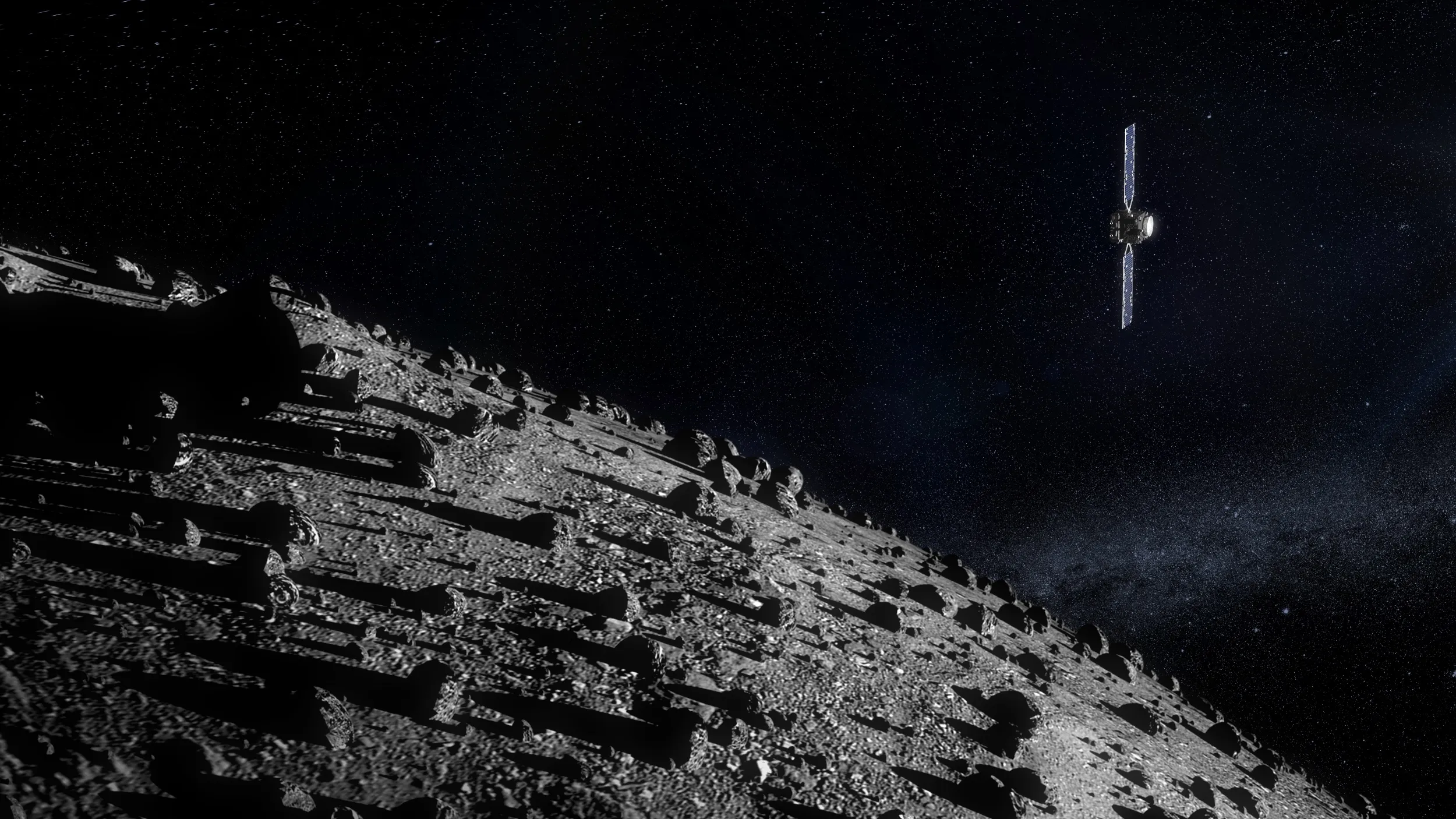
After two braking burns, ESA’s Hera is to make three smaller manoeuvres towards the end of October that bring its speed relative to the asteroids Didymos and Dimorphos down to near zero. Its arrival is planned for 4 November; our Article on its approach looks ahead to it.
Launch times move; the Next launches page has them as they stand. Amazon’s first Leo launch on ULA’s Vulcan, listed for the 29th until last week, has slipped to November in Launch Library.
Last week in orbit
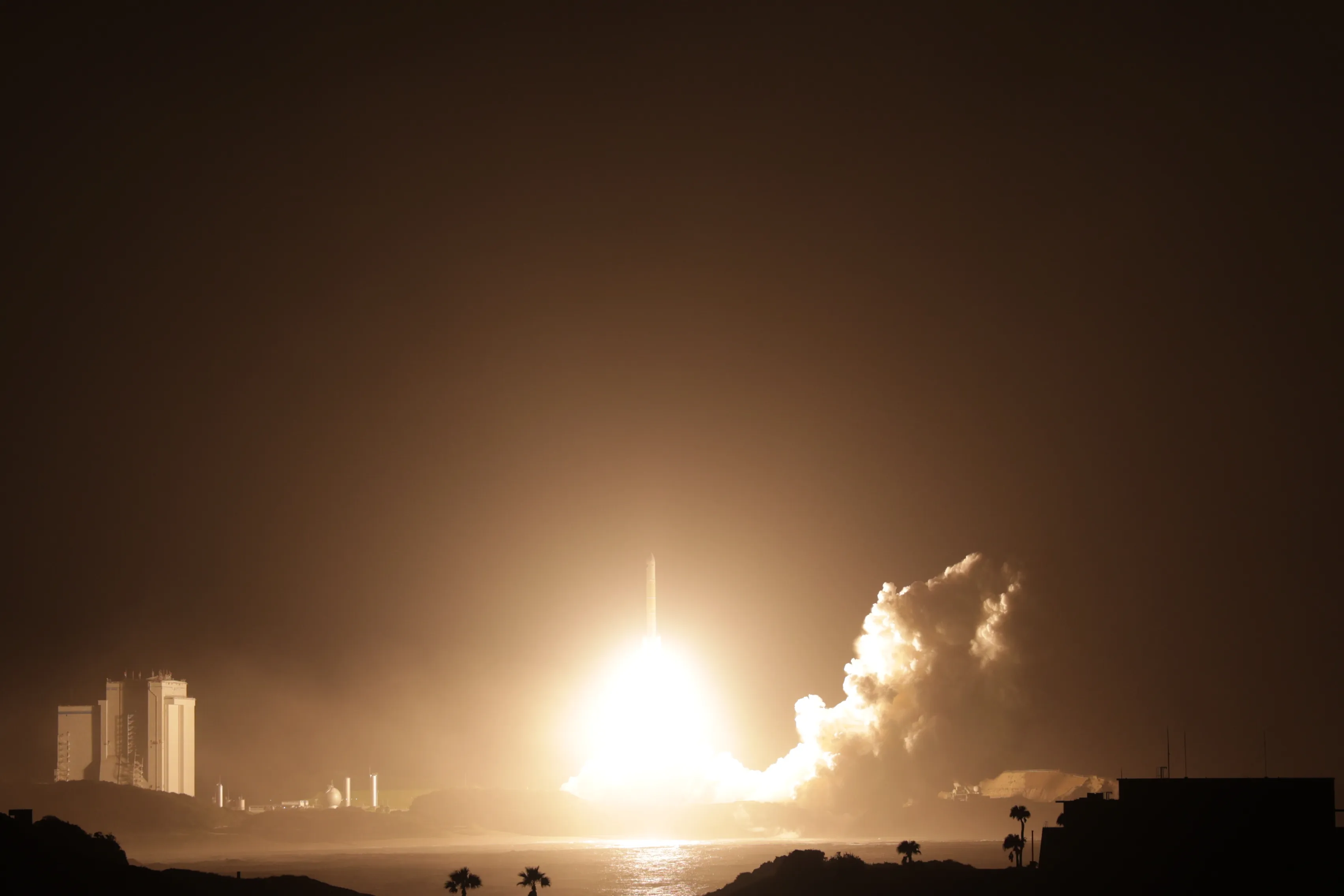
All eight orbital launches of 19 to 25 October succeeded, among them JAXA’s MMX, now on its way to Mars.
| Lift-off (UTC) | Launch | From | Outcome |
|---|---|---|---|
| 19 Oct 19:41 | H3 · MMX | Tanegashima, Japan | Success |
| 20 Oct 11:04 | Falcon 9 · Bandwagon-5 | Cape Canaveral, Florida | Success |
| 21 Oct 03:39 | Ceres-1S · Xiguang-4 01 | Yellow Sea, off Rizhao, China | Success |
| 23 Oct 07:11 | Electron · We’re Not Hawking Around (HawkEye 360 Cluster 16) | Mahia, New Zealand | Success |
| 23 Oct 10:15 | Long March 6A · Yaogan 50-03 | Taiyuan, China | Success |
| 23 Oct 19:25 | Long March 4B · Yaogan 53-07 to 09 and 56-19 to 21 | Jiuquan, China | Success |
| 23 Oct 22:48 | Falcon 9 · Starlink Group 15-15 | Vandenberg, California | Success |
| 25 Oct 02:03 | Long March 8A · SatNet LEO Group 28 | Wenchang, China | Success |
Cosmos 2612 and ICEYE-X36 parted on the 19th, as we reported, and NASA ended Swift’s mission on 23 October, expecting it to re-enter within weeks.
The closest approach: two fragments of Fengyun-1C, the satellite China destroyed in a 2007 anti-satellite test, were predicted 17 m apart on 21 October (a chance of collision of about 1 in 260); their orbits since show no sign that they touched.
Nineteen objects came down in our Re-entries list, the largest by GCAT’s estimate the Russian military satellite Cosmos 2572; Space-Track has since dated several more to the week, which our list adds with its next decay query.
| Day (UTC) | Re-entry | What it was |
|---|---|---|
| 19 Oct | Cosmos 2572 | Russian military imaging satellite |
| 19 Oct | JILIN-01 GAOFEN 3H | Chinese Earth-imaging satellite |
| 20 Oct | OBJECT E (2022-098E) | Chinese Earth-imaging satellite, Jilin-1 Gaofen 03D-43 per GCAT |
| 20 Oct | Cosmos 2251 debris | A fragment of the Russian satellite Cosmos 2251 |
| 23 Oct | Yaogan-35 02B | Chinese military satellite |
| 23 Oct | Electron kick stage | Rocket stage |
| 19 to 25 Oct | 13 Starlinks | SpaceX broadband satellites |
Our Census counted 32,755 catalogued objects in orbit on Sunday 25 October, ten more than a week before.